

Choosing the right wardrobe material is one of the most important decisions in any home interior project — and one of the most confusing. With options ranging from budget-friendly particle board to premium solid wood and everything in between, the right choice depends on your usage, climate, budget, and finish preference.
At Zinoti, our modular wardrobe designers in Bangalore work with all major wardrobe materials daily — and we’ve put together this complete guide to help you make an informed decision before you commit to any material.
First, look into what type of materials are available for your wardrobe.
Popular Wardrobe Materials — An Overview
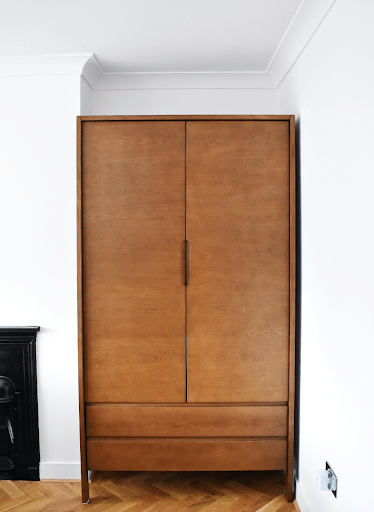
The most common best material for wardrobe used in construction include wood, engineered wood, metal, and glass.
- Wood: Known for its durability and classic look, wood can be expensive but is often considered worth the investment for its longevity and ease of maintenance.
- Engineered Wood: A more affordable solution to solid wood, engineered wood like MDF or particle board is versatile and comes in various finishes.
- Metal: Ideal for a modern look, metal is durable and resistant to pests, though it can be prone to dents and rust if not properly treated.
- Glass: Often used for doors to add a touch of elegance and to make spaces appear larger, glass needs careful handling and regular cleaning.
Exploring these best material for wardrobe can be exciting, but selecting the right one might feel overwhelming. At Zinoti, we provide expert guidance to help you choose materials that match your style and needs.
Next, we must consider some factors when choosing the best material for wardrobes.
Key Factors to Consider When Choosing Wardrobe Material
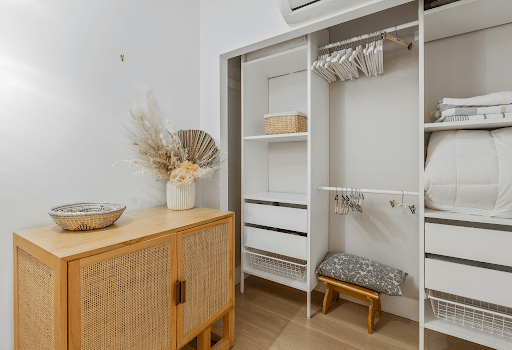
- Durability: The material should be durable and long-lasting.
- Cost: Consider your budget and the cost-effectiveness of the material over time.
- Maintenance: Some materials require more care than others, affecting your long-term satisfaction.
- Style: The material should match the overall design theme of your room.
- Climate: Some materials function better in specific climates, while some get damaged under certain environments.
Want a durable, cost-effective wardrobe, Zinoti will help you find the best material for wardrobe design. Visit our experience store for a live look at the materials and how they’ll look in your home.
Let’s start with the base materials on the wardrobe materials list.
Base Materials — What Your Wardrobe is Built From
Here are some of the Best Material For Wardrobe design that suit your needs and offer everything from affordability to luxury.
Plywood
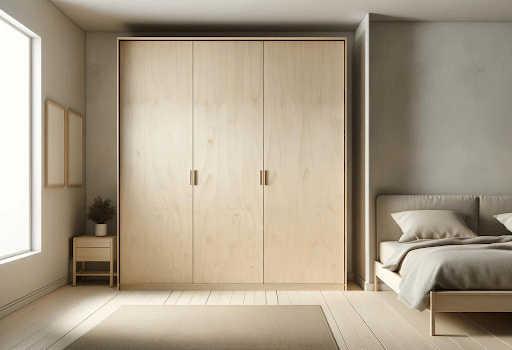
A top choice for many, plywood is versatile, strong, and incredibly durable. Plywood is also suitable for low-moisture areas like bedrooms. This material, made from thin layers of real wood glued together, offers impressive durability and stability at an affordable price. Thanks to clever finishing touches like veneers or laminates, plywood is a sleek and stylish option to add to your wardrobe materials list.
Particle Board
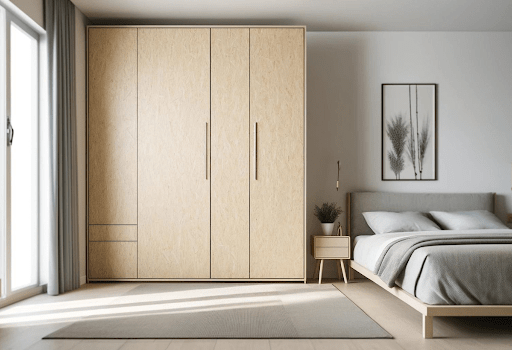
For a more budget-friendly option that is still stylish, consider particle board. It’s cost-effective and environmentally friendly as it uses compressed wood particles. This material can be easily painted or covered with laminates, making it ideal for decorative finishes. However, keep in mind that particle board is not very strong, so it’s not ideal for heavy loads.
Medium Density Fiberboard (MDF)
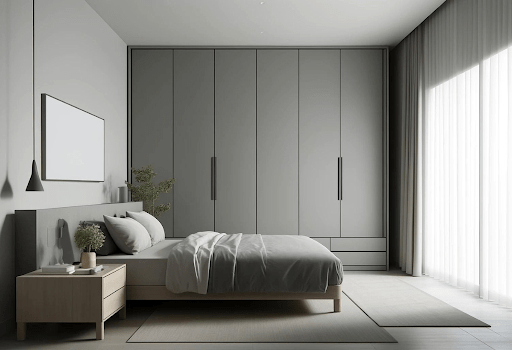
MDF is a green material known for its smooth look and finish. It offers good stability and resistance to warp. It’s suitable for dry areas and indoor furniture as a solid base for paints and varnishes. This material is made from wood fibers compressed with resin, but should not be used in humid areas like bathrooms.
Wood Plastic Composites (WPC)
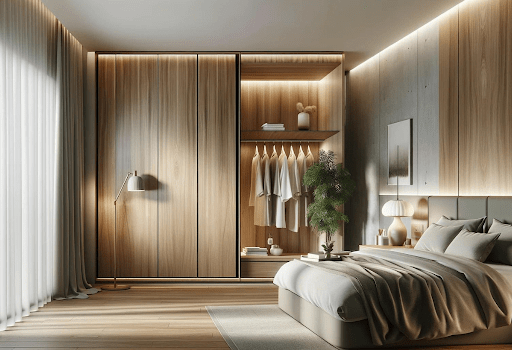
WPC stands out among eco-friendly materials. It’s made from wood and plastic, combining their water-resistant properties and robustness. This material is versatile enough for various applications, including wardrobes. You can use WPC for everything from shelves to drawers in your wardrobe. Plus, it offers a sleek and contemporary look.
Solid Wood
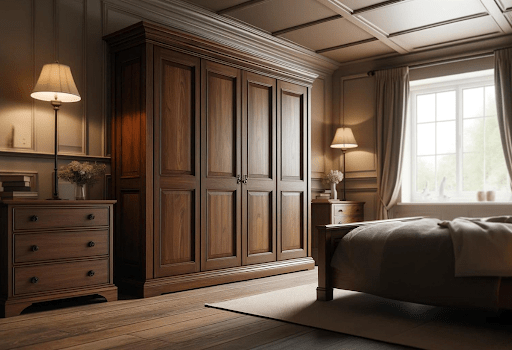
Solid wood offers unmatched durability and an aesthetic look. While it may be pricey, solid wood creates a timeless look and strength for those looking for longevity with luxury. From the rich warmth of mahogany to the clean lines of maple, solid wood offers quality craftsmanship.
Now, let’s talk about the best material for finishing a wardrobe that will transform it from a storage space to a style statement.
Finishing Materials for Wardrobe
The right finishing materials can greatly improve your wardrobe’s functionality and style.
Veneer
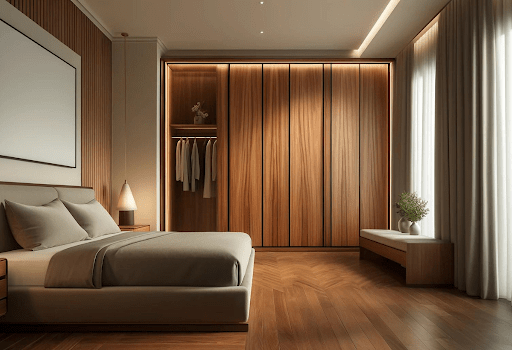
Veneer is an excellent, more budget-friendly alternative to solid wood. It gives your wardrobe a natural wood appearance. However, it requires maintenance to keep fresh. This clever material uses thin slices of real wood combined with a base, like plywood or MDF.
Laminate
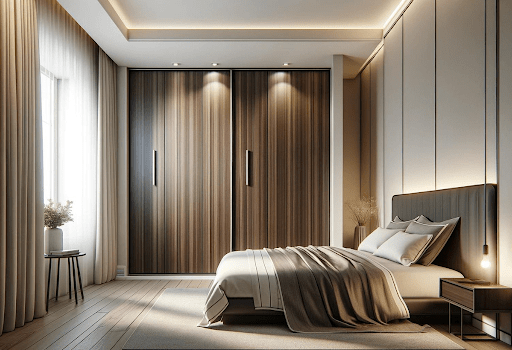
Laminate finishes are perfect for those who require durability and ease of maintenance for their wardrobes. This material provides excellent resistance to wear and tear as well as moisture. Laminates are available in a range of designs and colors. From woodgrain finishes to bold pops of color, laminate is a great option for a stylish and practical wardrobe design.
Acrylic

Acrylic is one of the most popular premium wardrobe finishes in Bangalore right now — particularly for master bedroom wardrobes and walk-in closet systems. It delivers an ultra-glossy, mirror-like finish that is visually striking and significantly more reflective than standard laminate. Acrylic is applied as a sheet over an MDF or plywood base and is available in a wide range of colours. It is scratch-resistant but can show fingerprints and requires regular wiping. Acrylic finishes are mid-to-high range in cost — more expensive than laminate but less expensive than solid wood or veneer.
Glass
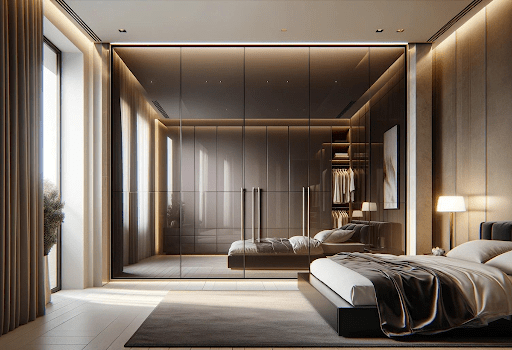
For a modern and sleek look, consider glass finishes for the best material for wardrobe. These come in frosted, tinted, or lacquered options with different levels of transparency. Glass finishes add contemporary magic especially when used in your bedroom.
Metal and Leather
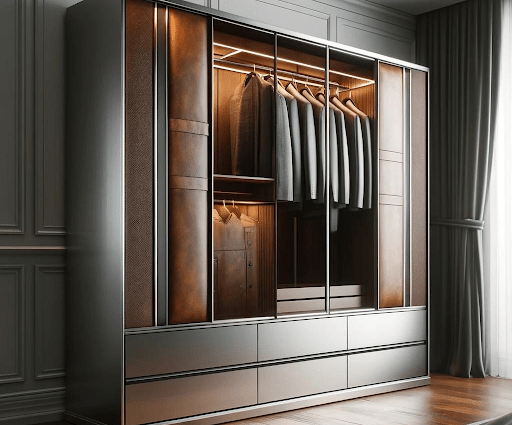
Metal and leather finishes make a bold statement when used in wardrobe designs. These materials add texture and a sense of luxury, turning your wardrobe into a standout piece. Metal finishes can range from sleek stainless steel to rustic iron
It’s time to weigh your options and determine which is the best material for wardrobe.
Pros and Cons of Popular Wardrobe Materials
| Material | Pros | Cons | Approx Cost (per sq ft) |
|---|---|---|---|
| Plywood | Strong, versatile, moisture-resistant | Heavy, needs finishing | ₹180–₹350 |
| Particle Board | Affordable, eco-friendly | Not water-resistant, less durable | ₹80–₹150 |
| MDF | Smooth surface, good for paint | Not water-resistant, heavy | ₹120–₹220 |
| WPC | Water-resistant, eco-friendly, durable | Higher cost than particle board | ₹200–₹380 |
| Veneer | Natural wood look, affordable vs solid wood | Scratch-prone, needs maintenance | ₹250–₹450 |
| Solid Wood | Unmatched durability and elegance | Most expensive, needs maintenance | ₹600–₹1,500+ |
| Laminate | Durable, easy to clean, variety of finishes | Can chip, less natural look | ₹150–₹300 |
| Acrylic | Ultra-glossy premium finish | Shows fingerprints, higher cost | ₹350–₹600 |
| Glass/Acrylic doors | Modern look, visually spacious | Fragile, needs frequent cleaning | ₹300–₹700 |
| Metal/Leather | Statement piece, unique look | Very expensive, limited use cases | ₹800–₹2,000+ |
Things to Keep in Mind When Choosing Wardrobe Materials
These key factors will help you make the best choice for your needs and lifestyle when selecting the best material for wardrobes.
- Budget and Cost: Consider your budget and cost when choosing a suitable material. Are you looking for mid-range options like laminate or a beautiful veneer? Or can you expand into high-end, handcrafted solid wood masterpieces?
- Style Consistency: Your wardrobe should complement your room’s overall design and style. Do you have a sleek, modern space perfect for glass or metal finishes? Maybe you can choose the warmth of wood tones for your cozy, cottage-style space.
- Durability and Longevity: Consider how long you expect your wardrobe to last. If you’re looking for a temporary solution, plywood or MDF might be your best bet. Solid wood or high-quality laminate could be the ideal choice if you invest in a piece of furniture for longevity.
- Maintenance and Humidity Resistance: Some materials, like solid wood, require more maintenance than others. Others, like laminate, are practically maintenance-free. Think about your lifestyle and how much time you’re willing to dedicate to upkeep.
Conclusion
Choosing the right wardrobe material for your Bangalore home comes down to four things — your budget, the room’s humidity level, your style preference, and how long you want the wardrobe to last. For most Bangalore apartments, marine-grade plywood with an acrylic or laminate finish offers the best balance of durability, aesthetics, and cost. For premium projects, veneer over plywood or solid wood delivers a timeless result.
Don’t settle for an ordinary wardrobe. Zinoti’s modular wardrobe designers in Bangalore specialise in bespoke wardrobe systems — from compact bedroom wardrobes to full walk-in closets — crafted with the right materials for your specific space and lifestyle. Contact us for a free consultation or visit our experience store to see wardrobe materials in person before making a decision.
FAQ section — add before Recent Posts:
Which is the best material for wardrobe in India?
For most Indian homes — including Bangalore apartments — marine-grade plywood with a laminate or acrylic finish is the most recommended wardrobe material. It offers the best balance of strength, moisture resistance, finish quality, and cost. Solid wood is the premium choice for those prioritising longevity and natural aesthetics but comes at a significantly higher price. MDF and particle board are budget options suitable for dry areas with lighter usage requirements.
Is plywood or MDF better for wardrobes?
Plywood is generally better than MDF for wardrobes in most Indian home conditions. Plywood has a higher structural strength — it holds screws and hinges more securely, making it more durable for daily use. It also handles humidity better than MDF, which can swell and delaminate when exposed to moisture — a real concern in Bangalore’s monsoon season. MDF has a smoother surface better suited for painted finishes, but for overall wardrobe construction plywood is the recommended base material.
What is the difference between veneer and laminate for wardrobes?
Veneer is a thin slice of real wood applied over a plywood or MDF base — it has a natural wood grain appearance and feel, and ages gracefully. Laminate is a synthetic material made from resin-impregnated paper pressed onto a base — it comes in a wider variety of colours and patterns, is more scratch and moisture resistant, and is generally more affordable than veneer. Veneer is preferred for premium, natural aesthetics. Laminate is preferred for durability, low maintenance, and cost-effectiveness.
How long does a wardrobe last based on material?
Solid wood wardrobes last 25–50+ years with proper maintenance. Plywood wardrobes with quality laminate or veneer finish typically last 15–25 years. MDF wardrobes last 8–15 years depending on humidity exposure. Particle board wardrobes generally last 5–10 years with regular use. WPC wardrobes offer 15–20 years of durability especially in humid conditions. At Zinoti, all wardrobe projects come with a 15-year warranty regardless of base material.
Is acrylic finish good for wardrobes in Bangalore?
Yes. Acrylic is an excellent premium wardrobe finish for Bangalore homes — particularly for master bedroom and walk-in closet applications. It delivers a high-gloss mirror-like surface that makes the space feel more open and luxurious. It is scratch-resistant and easy to wipe clean. The main considerations are fingerprint visibility (wipe regularly with a microfibre cloth) and higher cost compared to laminate. For Bangalore’s climate, acrylic performs well as it is not moisture-sensitive.
Which wardrobe material is best for humid areas in Bangalore?
For Bangalore homes — especially bathrooms, kitchens, or areas near windows exposed to monsoon humidity — WPC (Wood Plastic Composite) and marine-grade plywood are the best choices. Both resist moisture absorption and warping that affects standard MDF and particle board. MDF should be avoided in high-humidity areas entirely. For wardrobe interiors exposed to humidity, Zinoti specifies moisture-resistant backing materials and sealed edges regardless of the face finish chosen.