

For years, white walls and pale finishes were seen as the safe route to a beautiful home. Increasingly, homeowners are discovering the quiet confidence of deeper colours: charcoal, navy, forest green and rich brown. Used thoughtfully, dark interior design ideas can make a home feel cosy, sophisticated and distinctly personal.
The secret is balance. A dark interior is not simply a dark paint colour on every wall. It is a considered combination of colour, texture, natural light, artificial lighting and furniture placement. Done well, deep tones make a room feel enveloping rather than gloomy. This is also where working with an experienced Luxury Interior Design Company in Bangalore pays off, because the right material palette and lighting plan decide whether a dark scheme feels rich or heavy.
For homeowners across Bangalore, from modern apartments in Kadugodi and Whitefield to larger independent homes, dark interiors offer a way to create character within contemporary layouts. This guide covers colour palettes, room-by-room ideas, lighting strategies and the common mistakes to avoid.
Why Choose Dark Interior Design for Your Home?
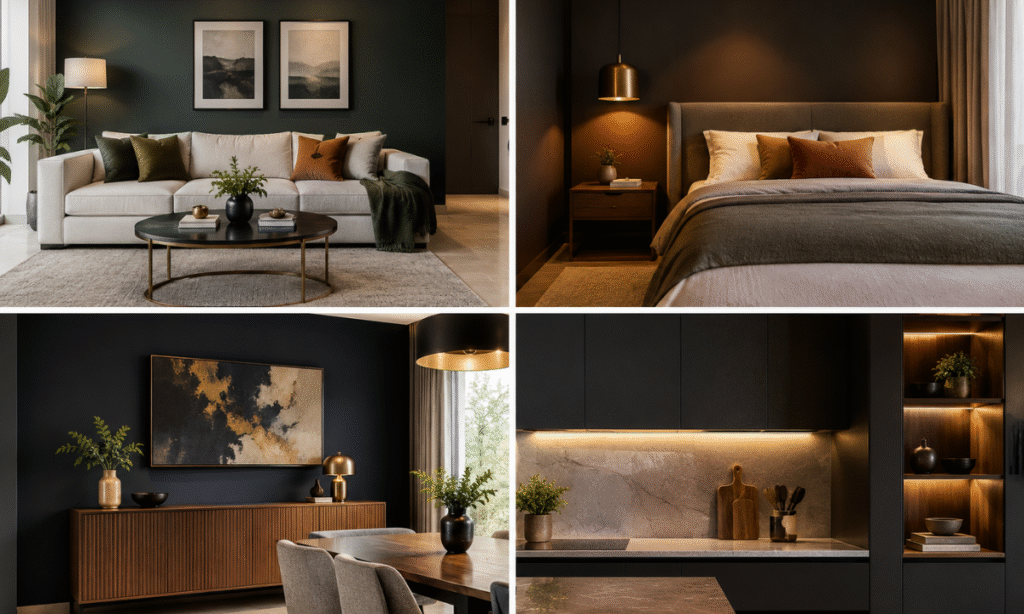
Create Depth and Visual Contrast
Deep colours add a sense of depth that pale walls rarely achieve. Set against lighter flooring, upholstery or ceilings, they create contrast that gives a room structure and definition.
Add Warmth and Intimacy to Living Spaces
Darker tones naturally feel enclosing, which can make a living room or bedroom feel more intimate and inviting, particularly in the evening under warm lighting.
Highlight Furniture, Artwork and Architectural Details
A deep backdrop allows artwork, brass fittings, wood grain and sculptural furniture to stand out. Much like a gallery wall, a dark surface lets the objects in front of it take centre stage.
A dark interior does not require every surface to be dark. Often, a single feature wall, dark cabinetry or deep-toned upholstery is enough to create the effect.
Best Dark Colour Palettes for Modern Home Interiors

Charcoal Grey and Warm Wood for Understated Luxury
Charcoal walls paired with walnut or teak-toned wood create a calm, refined look. The warmth of the wood softens the coolness of the grey.
Deep Navy Blue with Brass or Muted Gold Accents
Navy brings richness without the intensity of black. Brass handles, light fittings or frames add a subtle glow that lifts the palette.
Forest Green with Natural Stone and Textured Fabrics
Deep green feels grounded and organic. Pair it with natural stone, linen, bouclé or velvet for a layered, tactile interior.
Black and Beige for a Balanced Contemporary Look
Black accents set against beige walls or upholstery create crisp contrast while keeping the room light enough for everyday living.
Deep Brown and Taupe for a Warm, Earthy Atmosphere
Chocolate and taupe tones create an enveloping, earthy mood that works particularly well in bedrooms and reading corners.
Whichever palette you choose, coordinate wall colours, cabinetry, flooring, upholstery and metal accents so they work together. Always test paint and finish samples on site under both daylight and artificial light, as dark colours can look dramatically different at different times of day.
Dark Living Room Interior Design Ideas

Create a Charcoal or Deep-Toned Feature Wall
A single dark wall behind the sofa or television unit adds drama without overwhelming the room. Textured finishes, fluted panels or wood cladding add further interest.
Pair Dark Sofas with Lighter Rugs and Cushions
A charcoal or deep green sofa looks especially refined against a lighter rug, with cushions that echo the room’s accent colours.
Use Warm Lighting to Highlight Textures and Artwork
Cove lighting, picture lights and floor lamps bring out the texture of dark walls and draw attention to artwork and décor.
Balance Dark Furniture with Open Sightlines
Keep walkways clear and choose furniture with slimmer profiles or raised legs, so the room feels open even with deeper colours. Explore our living room interior design services for more ideas.
Dark Bedroom Design Ideas for a Relaxing Retreat

Use a Deep-Coloured Headboard Wall
A dark wall behind the bed creates a natural focal point and a sense of calm. Upholstered or panelled headboards add softness.
Combine Dark Wardrobes with Warm Wood Finishes
Dark wardrobe shutters can look striking when balanced with warm wood accents, lighter walls or integrated lighting inside the units.
Add Bedside Lighting and Soft Layered Textiles
Wall-mounted reading lights, pendant lights and dimmable ceiling lighting help a dark bedroom feel restful rather than dim. Layered throws and cushions add comfort.
Choose Curtains and Bedding That Complement the Palette
Curtains in linen or velvet and bedding in complementary tones complete the look. Our bedroom interior design approach balances mood with practical storage.
Dark Modular Kitchen Designs That Look Premium

Explore Charcoal and Matte-Black Kitchen Cabinets
Deep cabinetry gives a kitchen a confident, contemporary look, particularly when paired with integrated handles or slim profiles.
Combine Dark Cabinetry with Lighter Countertops
A light quartz or stone countertop creates contrast and keeps the working surface bright and easy to read while cooking.
Select Task Lighting for Worktops and Cooking Areas
Under-cabinet lighting is essential in a dark kitchen. Good task lighting improves safety and makes daily cooking more comfortable.
Consider Fingerprints, Cleaning and Finish Maintenance
Matte dark finishes can show fingerprints, water marks and oil more readily than lighter surfaces. Ask about anti-fingerprint finishes and cleaning requirements before choosing. For layouts and budgets, see our guide to modular kitchen designs with price.
How to Balance Dark Colours with Lighting and Materials
This is where dark interiors succeed or fail.
Make the Most of Natural Light
Rooms with large windows and good daylight can carry darker colours more easily. In rooms with limited daylight, consider using dark tones on one wall or in furniture rather than across the whole room.
Layer Ambient, Task and Accent Lighting
Dark surfaces absorb light, so plan more lighting than you would for a pale room. Combine ceiling lights, task lighting and accent lights, and choose warm colour temperatures to keep the space inviting.
Combine Matte Finishes with Selective Reflective Surfaces
Matte walls and cabinetry feel sophisticated, while touches of gloss, metal or polished stone reflect light and prevent the room from feeling flat.
Use Glass, Mirrors and Lighter Materials Strategically
Mirrors, glass shutters and lighter flooring help bounce light around and balance deeper colours.
Choose Suitable Finishes for Each Room’s Maintenance Needs
Kitchens and high-use areas need durable, easy-clean finishes, while living rooms and bedrooms can carry more delicate textures. Room orientation, window size, surface reflectivity and lighting temperature all influence how a dark interior looks in practice.
Are Dark Interiors Suitable for Apartments in Kadugodi?
How to Use Dark Colours in Compact Apartments
In smaller apartments, use deep tones selectively, such as a feature wall, a dark sofa or kitchen base units, while keeping ceilings and most walls lighter.
Choosing Dark Finishes for Rooms with Limited Daylight
For rooms that receive less natural light, darker furniture and accessories against lighter walls often work better than fully dark walls.
Balancing Dark Wardrobes and Storage with Lighter Walls
Dark storage units set against pale walls add depth without making a compact bedroom feel enclosed.
Adapting the Palette to Your Home’s Layout and Lifestyle
Every home is different, so the right approach depends on its layout, orientation and how your family uses each room. Experienced interior designers in Kadugodi can assess your space and recommend where deeper colours will work best.
Common Dark Interior Design Mistakes to Avoid
• Using dark colours everywhere without considering daylight
• Choosing oversized furniture for compact rooms
• Ignoring task lighting in kitchens and work areas
• Mixing too many competing finishes
• Selecting materials without checking maintenance requirements
A successful dark interior depends on balance, not just colour choice.
Conclusion
Dark interior design ideas can give a home depth, warmth and quiet sophistication. The most successful dark interiors balance deep colours with natural light, layered lighting, contrasting materials and practical finishes, so the result feels personal and liveable rather than heavy.
Planning a personalised home interior in Kadugodi? Get in touch with Zinoti to discuss a design suited to your space and lifestyle.
Frequently Asked Questions
Are dark interiors suitable for Indian homes?
Yes, when planned well. Dark tones work best with good natural light, layered lighting and easy-maintenance finishes. Many homes use them selectively, on a feature wall, cabinetry or furniture, rather than throughout.
Which colours work best for dark luxury interiors?
Charcoal grey, deep navy, forest green, deep brown and black are popular choices. They look most luxurious paired with warm wood, brass, natural stone and textured fabrics.
Can dark colours work in a small apartment?
Yes. Use them selectively, for example on one wall, in furniture or on lower kitchen cabinets, and keep ceilings and most walls lighter to preserve a sense of space.
How do you brighten a room with dark walls?
Add layered lighting, use warm colour temperatures, introduce mirrors and reflective surfaces, and balance dark walls with lighter flooring, rugs and upholstery.
Are matte-black kitchen cabinets difficult to maintain?
They can show fingerprints, water marks and oil more easily than lighter finishes. Anti-fingerprint finishes and regular gentle cleaning help keep them looking their best.
How can I plan dark interiors for my home in Kadugodi?
Start by assessing natural light, room sizes and how each space is used. A designer can then recommend where dark tones will work best and which finishes suit your lifestyle.