
15 Modern Hall Interior Design Trends to Transform Your Living Space
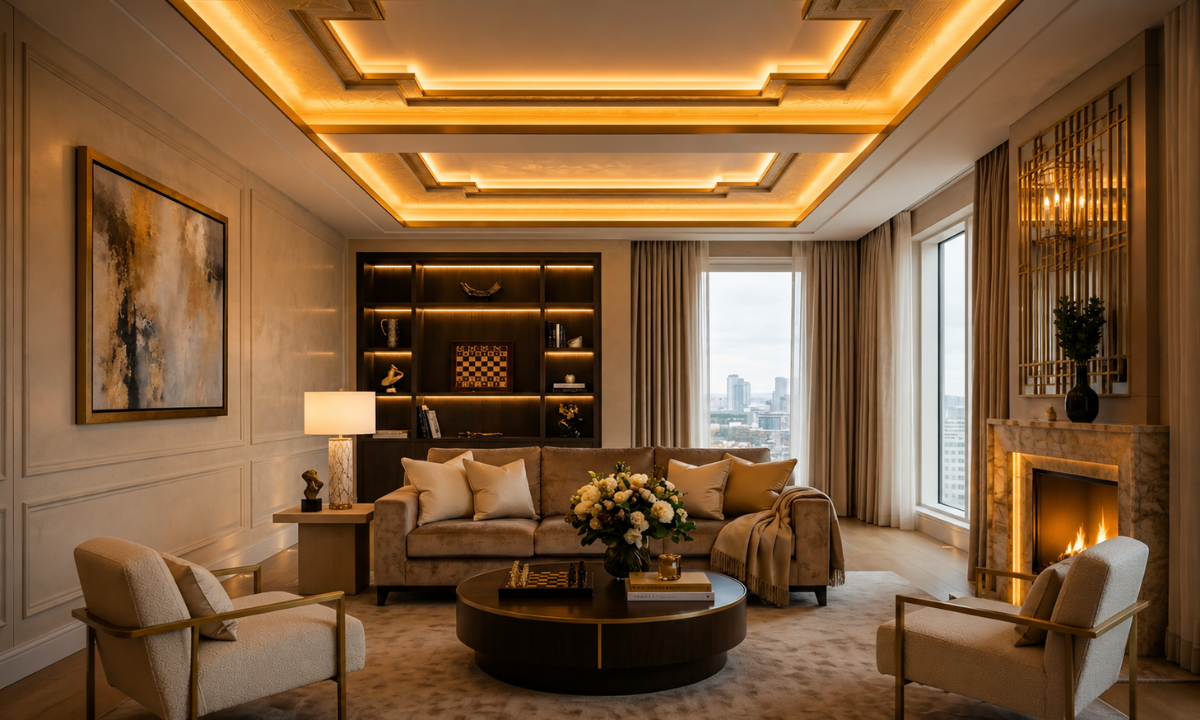
A luxury residence is no longer defined simply by expensive furniture or massive square footage. The true mark of a premium home lies in how the space actively manipulates human psychology.
In 2026, the living hall is no longer just a functional sitting area where you place a television and a sofa. It has evolved into a highly curated, sensory environment designed to instantly lower stress and project absolute sophistication the moment you walk into the room.
When you invest in a high-end property, your primary living space must act as a psychological anchor. It must balance the demand for impressive architectural grandeur with the fundamental human need for a serene, private sanctuary. Achieving this delicate balance between imposing scale and intimate warmth requires precise engineering.
This is exactly why elite homeowners rely exclusively on the Best Interior Designers in Bangalore to conceptualize and execute their living spaces. The era of purchasing disconnected, factory-made furniture pieces to fill a room is completely over. The modern luxury standard dictates that the entire space must operate as a single, cohesive architectural unit.
Every single element, from the tactile finish of the wooden wall cladding to the specific color temperature of the hidden cove lighting, must be engineered to work in absolute harmony.
To help you understand exactly how to elevate your property to this elite standard, we are going to break down the fifteen definitive modern hall interior design trends currently dominating the luxury market. These are not superficial decor tips. These are structural, architectural, and material shifts that will completely transform how your living space looks, feels, and functions.
The Grand Entrance and Defining First Impressions
The narrative of your luxury living space actually begins before you even enter the primary hall. In elite architectural planning, the foyer is a highly engineered transition zone. It operates as the architectural handshake of your home.
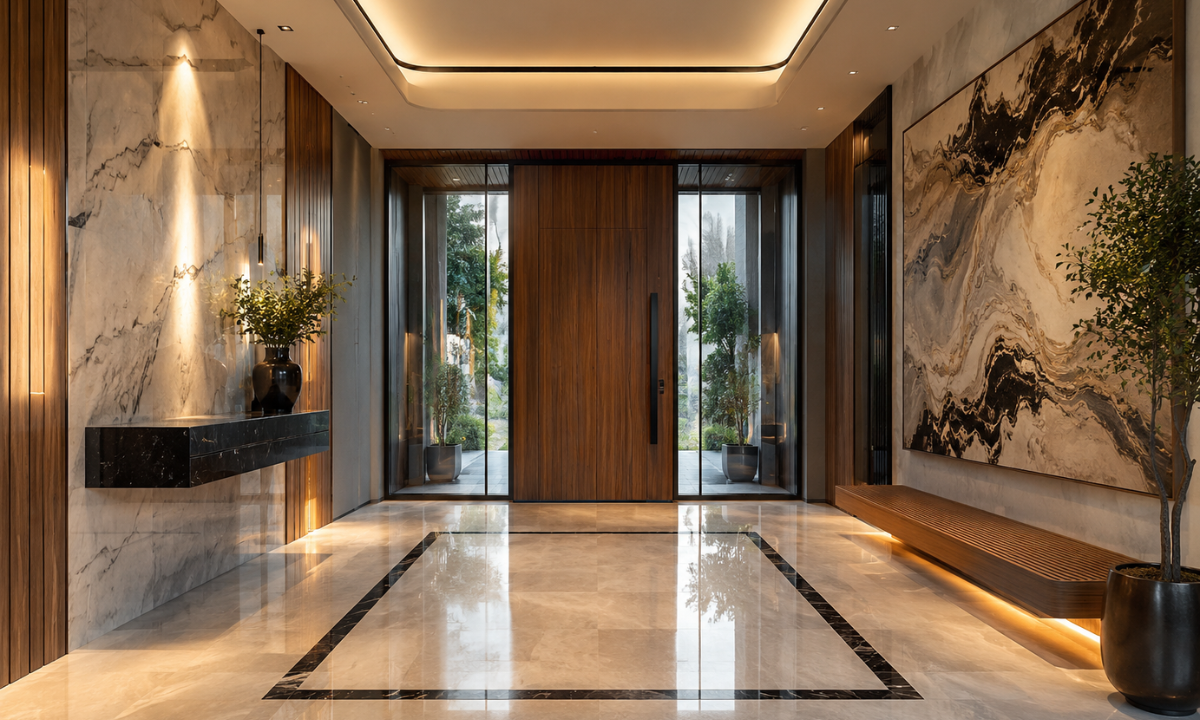
Elite architects utilize this space to initiate a deliberate psychological shift. By manipulating scale, lighting, and material weight, they separate the chaos of the outside world from the absolute serenity of your private sanctuary. To execute a flawless Front entrance design, the 2026 luxury standard dictates a complete departure from standard residential doorways and cluttered entry tables.
Consider the three definitive trends currently reshaping the luxury foyer:
Trend 1: The Oversized Pivot Door
Standard hinged doors break the visual flow of a luxury facade and feel physically lightweight. Premium properties now utilize massive, floor-to-ceiling wooden or glass pivot doors. These monolithic structures operate on a central concealed axis, providing a sweeping, cinematic entrance that immediately establishes a tone of monumental scale.
Trend 2: Smart Transitional Lighting
The lighting in your foyer must actively manage the psychological transition into the home. Relying on a single, glaring ceiling light is a severe design flaw. Luxury entrances now utilize layered illumination. Recessed floor spotlights and motion-activated soft cove LEDs create a glowing, guided pathway into the primary living hall without overwhelming the senses.
Trend 3: The Monolithic Console as Fine Art
We are completely abandoning the concept of the basic entry table used for dropping keys. Modern entrance design demands a single, monolithic console crafted from raw travertine, fluted oak, or honed marble. When paired with an oversized, organically shaped mirror or a curated sculpture, it serves as a bold, standalone art installation that anchors the entire space.
| The Foyer Element | The Factory Standard | The Zinoti Bespoke Standard |
|---|---|---|
| The Primary Doorway | Standard dimensions with exposed metal hinges. | Floor-to-ceiling pivot mechanisms with zero visible hardware. |
| Entrance Illumination | Entrance Illumination | Layered, warm ambient cove lighting that guides the eye naturally. |
| The Console Unit | A functional, factory-made wooden table. | A custom-carved travertine or marble block acting as fine art. |
When you engineer the entrance correctly, you dictate exactly how the rest of the living space is perceived. It sets an uncompromising standard of luxury that your main hall must then carry forward.
Contemporary Wooden Decor: Reimagining Material Warmth
The legacy approach to adding warmth to a living room involved purchasing heavy, disconnected wooden furniture pieces and scattering them across the floor plan.
This outdated method visually shrinks the room and creates unnecessary physical clutter. In the 2026 luxury market, wood is no longer treated simply as furniture. It is deployed as a continuous architectural skin used to sculpt the very boundaries and proportions of the room.
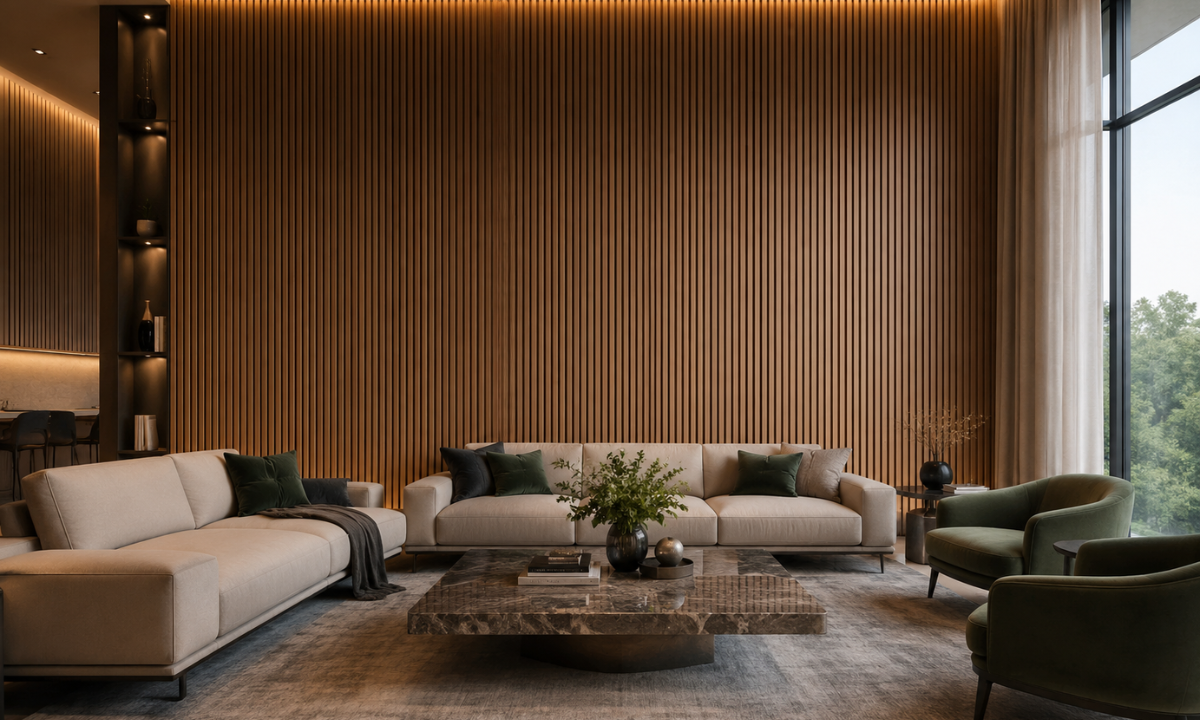
To execute a flawless Wooden hall interior design, elite architects are witnessing a complete rejection of high-gloss laminates. The current mandate demands raw, matte finish natural veneers that celebrate organic, open grain textures.
The true hallmark of modern luxury is the complete elimination of visual friction. Wood is used to conceal structural necessities while simultaneously providing unparalleled tactile warmth.
Consider the three specific architectural trends defining how modern luxury homes are deploying wood today:
Trend 4: Floor to Ceiling Fluted Panelling
Flat, painted walls offer zero acoustic or visual depth. Premium living spaces now feature continuous vertical wood slats that stretch flawlessly from the floor to the ceiling. These fluted panels perform a dual function. Visually, the unbroken vertical lines draw the eye upward, instantly making the room feel vastly taller and more imposing. Functionally, the precise grooving provides excellent acoustic dampening for high-end entertainment systems, effectively eliminating echo in massive open concept halls.
Trend 5: The Architectural Fifth Wall
The ceiling remains the most underutilized real estate in a standard apartment. However, 2026 luxury interiors are aggressively extending wooden wall treatments directly overhead. By wrapping a specific seating zone in micro-grain European oak or premium dark walnut, designers create a deeply intimate, cocoon-like atmosphere within a massive living space. This ceiling canopy visually separates the formal seating area from the dining zone without requiring physical partition walls.
Trend 6: Monolithic Concealment Volumes
True Contemporary wooden Decor relies heavily on the advanced art of hiding functional elements. Instead of framing visible doors or exposing load-bearing structural columns, elite architects wrap entire wall sections in seamless wooden cladding.
Powder room doors, deep storage closets, and utility panels become completely invisible. They operate on highly engineered European push mechanisms to maintain an uninterrupted, monolithic wooden facade that feels like a solid architectural block rather than a simple cabinet.
Achieving this level of seamless integration requires absolute precision in high-end carpentry. A variation of even two millimeters in panel alignment destroys the luxury aesthetic. This level of microscopic detailing and structural perfection is exactly where bespoke engineering drastically outclasses factory-made alternatives.
The Modern Seating Evolution: Sleek & Bespoke Silhouettes
The living room sofa is the ultimate anchor of residential comfort, but its architectural role has fundamentally changed.
The legacy approach of pushing heavy, oversized sofas against the wall destroys the spatial flow of a luxury hall. In 2026, the modern seating evolution is defined by structural lightness. We are seeing a definitive shift toward bespoke seating that commands the center of the room without visually suffocating the space.
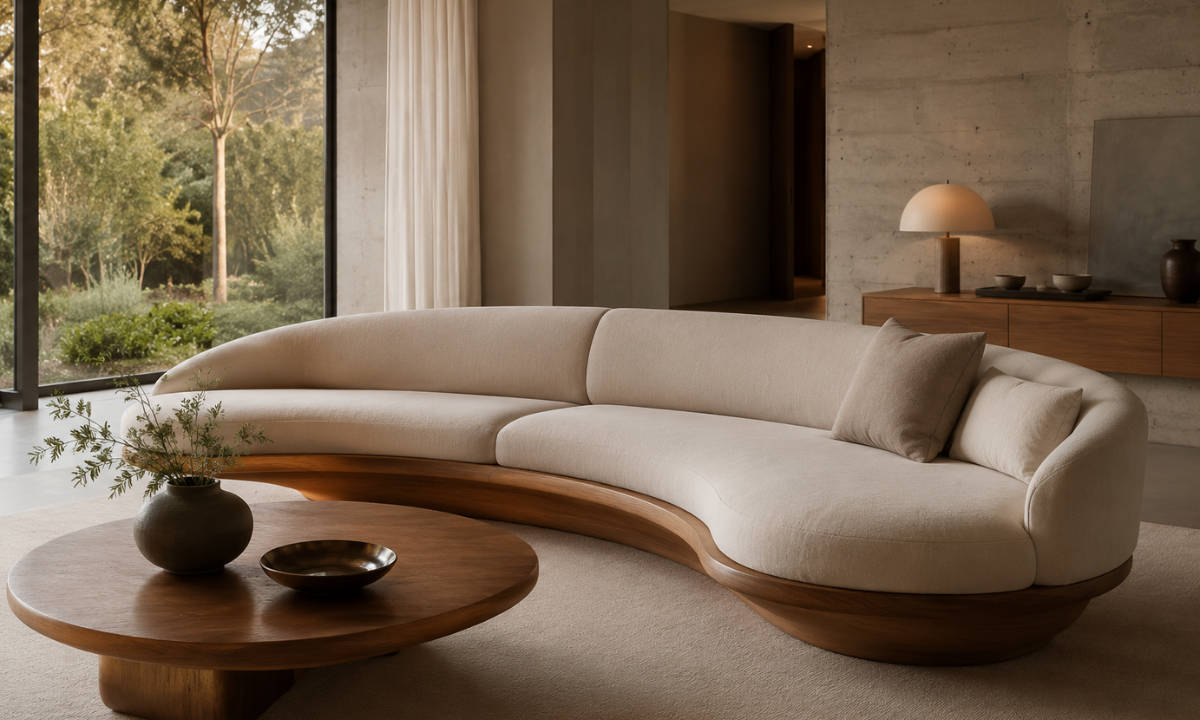
When integrating Wooden sofa designs into a premium layout, elite interior architects are completely rejecting bulky traditional frames and heavily carved armrests. The new luxury standard demands seating that feels sculptural, floating, and effortlessly modern.
Consider the three primary trends redefining high-end residential seating:
Trend 7: The Low-Profile Floating Timber Base
Standard sofas sit heavily on the floor, blocking light and making the room feel smaller. The 2026 luxury standard utilizes a recessed, solid timber base often crafted from premium walnut or brushed oak that is set back from the edge of the upholstery.
This structural engineering creates a dramatic optical illusion, making the massive seating volume appear as if it is floating inches above the rug. It provides the durability of a solid wood frame while maintaining absolute visual lightness.
Trend 8: The Statement Curved Silhouette
Sharp, boxy sectionals are aggressively being phased out. The most dominant seating trend in luxury homes today is the curved or crescent sofa. By softening the harsh right angles of a room, curved seating naturally encourages conversation and fluidity. When positioned in the center of an open-plan hall, the organic silhouette becomes a striking architectural centerpiece that feels infinitely more welcoming than rigid, straight-lined furniture.
Trend 9: Modular Japandi Adaptability
True luxury is the ability to adapt to any hosting requirement without compromising aesthetics. Modern premium seating relies heavily on the Japandi influence, a fusion of Japanese minimalism and Scandinavian warmth. These bespoke modular systems feature clean slatted wooden backs and deep, ultra-plush seating. The individual modules can be seamlessly separated or combined, allowing homeowners to shift their layout from an intimate family movie night to a grand cocktail reception without shifting heavy structural frames.
The upholstery mandate for 2026 completely rejects loud, distracting patterns. Elite interiors rely exclusively on highly tactile, performance-grade fabrics like heavy bouclé, matte velvet, and breathable Italian linen in deep earth tones, terracotta, warm taupe, and olive green to anchor the wooden bases perfectly.
A bespoke sofa is not just a place to sit; it is a meticulously engineered piece of architecture that defines the traffic flow and social dynamic of your entire living space.
The Smart Entertainment Wall: Media Units as Fine Art
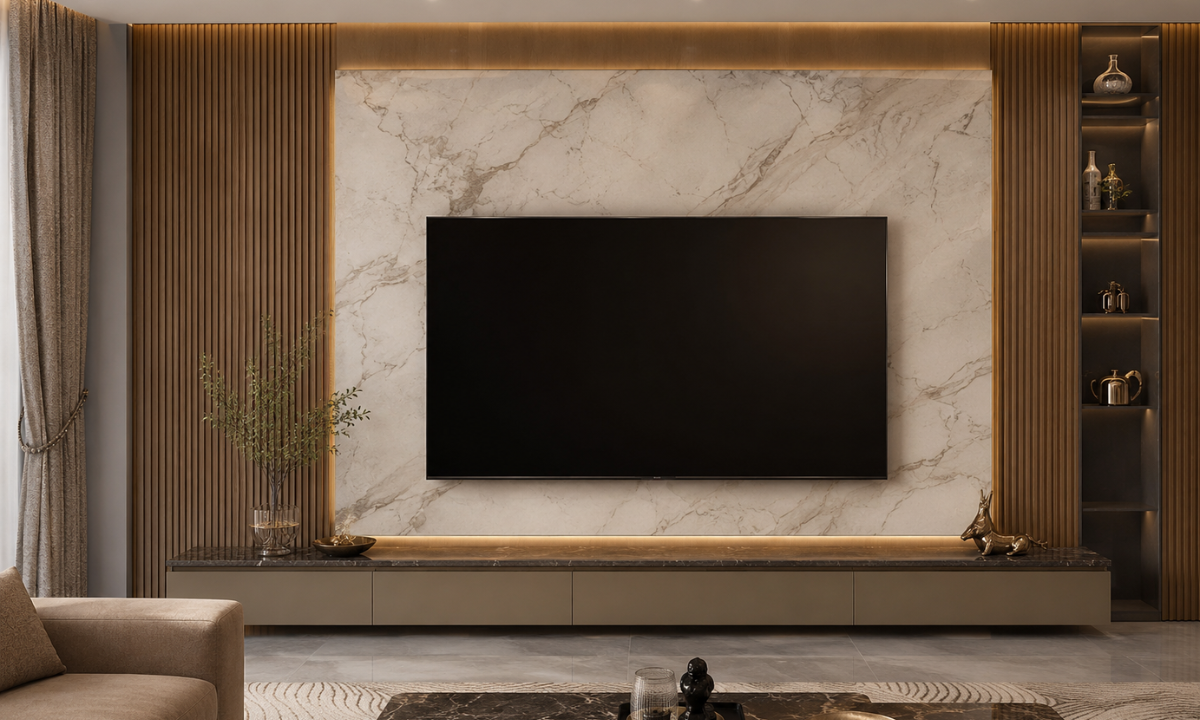
The television has historically been the primary aesthetic disruptor in a living room. A massive black screen mounted on a bare wall instantly degrades the sophisticated ambiance of a luxury space. In 2026, the elite approach to TV Unit design completely shifts the narrative.
The entertainment wall is no longer treated as a simple mount for electronics; it is engineered as a monolithic piece of fine art that seamlessly integrates technology directly into the architecture of the room.
To achieve this level of smart concealment and visual balance, interior architects are deploying three highly specialized design mechanisms:
Trend 10: Flush Architectural Integration
Luxury homes no longer tolerate visible cables, mounting brackets, or protruding screens. The modern standard demands that the television sit completely flush with the surrounding wall.
Designers build custom acoustic paneling or utilize large-format porcelain slabs to create a recessed niche perfectly mapped to the exact dimensions of the screen. This allows the television to look like a digital art frame embedded directly into the stone, rather than a heavy appliance hanging off the wall.
Trend 11: The Floating Quartz Ledge
The bulky floor-standing media cabinet is entirely obsolete. To maintain the illusion of an expansive, uncluttered floor plan, elite living rooms feature a single, ultra-slim floating ledge. Crafted from premium materials like honed quartz or solid travertine, this ledge is reinforced with heavy-duty concealed steel brackets. It provides just enough surface area to display curated art pieces or a sleek soundbar while keeping the floor completely clear and visually lightweight.
Trend 12: Motorized Concealment Systems
The ultimate hallmark of luxury interior design is the ability to make technology completely disappear when not in use. Advanced media walls now feature automated sliding panels engineered from matched wood veneer or textured canvas. With a single button press on a smart home tablet, these silent motorized panels glide over the screen. This instantly transforms a high-tech entertainment zone into a serene, uninterrupted architectural backdrop.
1. The Base Layer: Acoustic Foundation:
Installing high-density acoustic felt behind the primary aesthetic finish to absorb sound and prevent vibration distortion from high-end audio systems.
2. The Aesthetic Skin: Marble and Fluted Wood:
Layering matte fluted timber alongside a striking slab of book-matched marble to create a deeply textured, high contrast visual anchor.
3. The Illumination: Bias Lighting:
Integrating soft, warm LED strips behind the floating panels and the screen itself to reduce eye strain and highlight the premium material finishes.
You ensure that your living space remains overwhelmingly elegant, whether the screen is turned on or completely concealed.
The Neo-Classical Balance: Refined Indian Aesthetics
Achieving a sophisticated, culturally rich interior without cluttering a minimalist layout is one of the most complex design challenges. For high-end homes, the solution relies heavily on a refined neoclassical approach.
Achieving a simple Indian-style hall interior design means completely moving away from heavy, overbearing ornamentation. Instead, elite designers focus on distilling timeless cultural elements into clean, modern architectural lines.
This sophisticated fusion honors heritage through three highly curated design shifts:
Trend 13: Minimalist Structural Arches
Traditional Indian architecture is celebrated for its grand, sweeping entryways. Modern luxury homes are reintroducing this element by carving soft, geometric arches into structural partition walls. These clean-lined openings create a stunning visual frame between the living hall and dining areas, maintaining an open-plan feel while offering a beautiful nod to classical design.
Trend 14: Curated Antique Brass Articulations
Rather than filling shelves with generic decor pieces, contemporary spaces incorporate heritage materials functionally. Designers integrate custom cast brass details directly into the architecture. This includes using brushed brass strips inlaid into polished stone floors, delicate metal trim bordering wooden panels, and custom-designed door handles that provide a rich tactile experience.
Trend 15: Monochromatic Hand-Crafted Textures
To add profound depth to a simple Indian-inspired layout, designers use large-scale artisanal wall treatments. Applying a soft, textured lime-wash finish or hand-burnished clay plaster to a single focal wall introduces a beautiful, earthy patina. When paired with neutral, minimalist furniture, this texture bridges the gap between ancient craftsmanship and contemporary design.
| Heritage Element | The Outdated Execution | The Modern Neo-Classical Approach |
|---|---|---|
| Arches | Heavily carved wood with intricate, busy patterns. | Smooth, unadorned geometric curves are built into the wall structure. |
| Metal Accents | Polished, bright brass statues are scattered randomly. | Subtle, matte-finished brass inlays flush with wood or stone. |
| Textiles | Overly bright, heavily saturated block-print upholstery. | Subdued, neutral-toned silks and raw linens with organic weaves. |
Translating traditional motifs into a highly restrained, architectural language, you create a living space that feels deeply personal, culturally grounded, and undeniably luxurious.
Why Choose Zinoti? Engineering the Future of Residential Luxury
Transforming an expansive living space into a unified architectural masterpiece requires absolute structural precision. It demands an expert team capable of handling complex engineering, material sourcing, and seamless spatial design under one roof. As the premier Interior Designers in Bangalore, Zinoti rejects the chaotic, fragmented contractor model. We deliver a flawless, high-end turnkey execution that protects your time and your investment.
When you partner with Zinoti to transform your residence, you benefit from an elite corporate framework:
- Twelve Years of Proven Mastery: Our long-standing legacy of creating iconic spaces across Bangalore ensures your property is managed with deep structural and aesthetic expertise.
- The Power of an In-House Team: We do not outsource your dream to unpredictable third-party contractors. Our dedicated team of over 150 execution professionals, site engineers, and project managers handles every single detail with military precision.
- A Dedicated Experience Store: Walk directly into our physical Experience Store to physically interact with premium veneers, touch our custom metalwork, and evaluate advanced lighting designs before construction begins.
From the initial 3D conceptualization to material manufacturing and the final handover, we assume total responsibility for your timeline, budget, and craftsmanship.
The Way Forward
A masterfully designed living hall is the ultimate reflection of your personal success. By moving completely away from generic, fast-furniture layouts and embracing continuous wooden skins, sculptural floating furniture, and smart concealment technology, you invest in a home that commands absolute respect.
Stop settling for uncoordinated, stressful renovation processes. Let the experts engineer a breathtaking, cohesive sanctuary that effortlessly elevates your everyday living experience. Contact Zinoti today to tour our Experience Store and begin crafting the magnificent living space your luxury home deserves.